UI Design · Service Design · Digital · Social Impact
RoeLab
What if your degree taught you how to actually work — not just what to study?
RoeLab was designed in response to a Design for Change brief: propose a product or service that creates genuine social impact. The problem I wanted to address was the distance between academic education and professional reality — students graduating without knowing how to follow a brief, price their work, or communicate with a client, because nobody had ever taught them.
RoeLab is a concept for a digital learning platform embedded within Roehampton University, where industry professionals share practical knowledge step by step — not theory, but the real mechanics of working in a field. How to respond to a brief. How to talk to a client. How to structure your pricing. Knowledge that usually only comes from already being inside the industry.
The platform also breaks down the silos between disciplines. A journalism student can take a sports science module to position themselves for sports media. An animation student can take a marketing class to build the foundation for a freelance career. Students don't just deepen their primary skill — they strategically expand into adjacent fields that make them more specific, and more employable.
The concept is grounded in an observation: many university lecturers are, or were, accomplished professionals in their field before they moved into teaching. That expertise already exists inside the institution — it just isn't always structured in a way that makes it fully accessible to students. RoeLab is a proposal for how to make that knowledge intentional, scalable, and open to the whole university, not just the students lucky enough to end up in the right room.
The social impact is structural: it gives every student access to the kind of industry knowledge that currently depends on who you happen to know.
UI design and service concept — Roehampton University
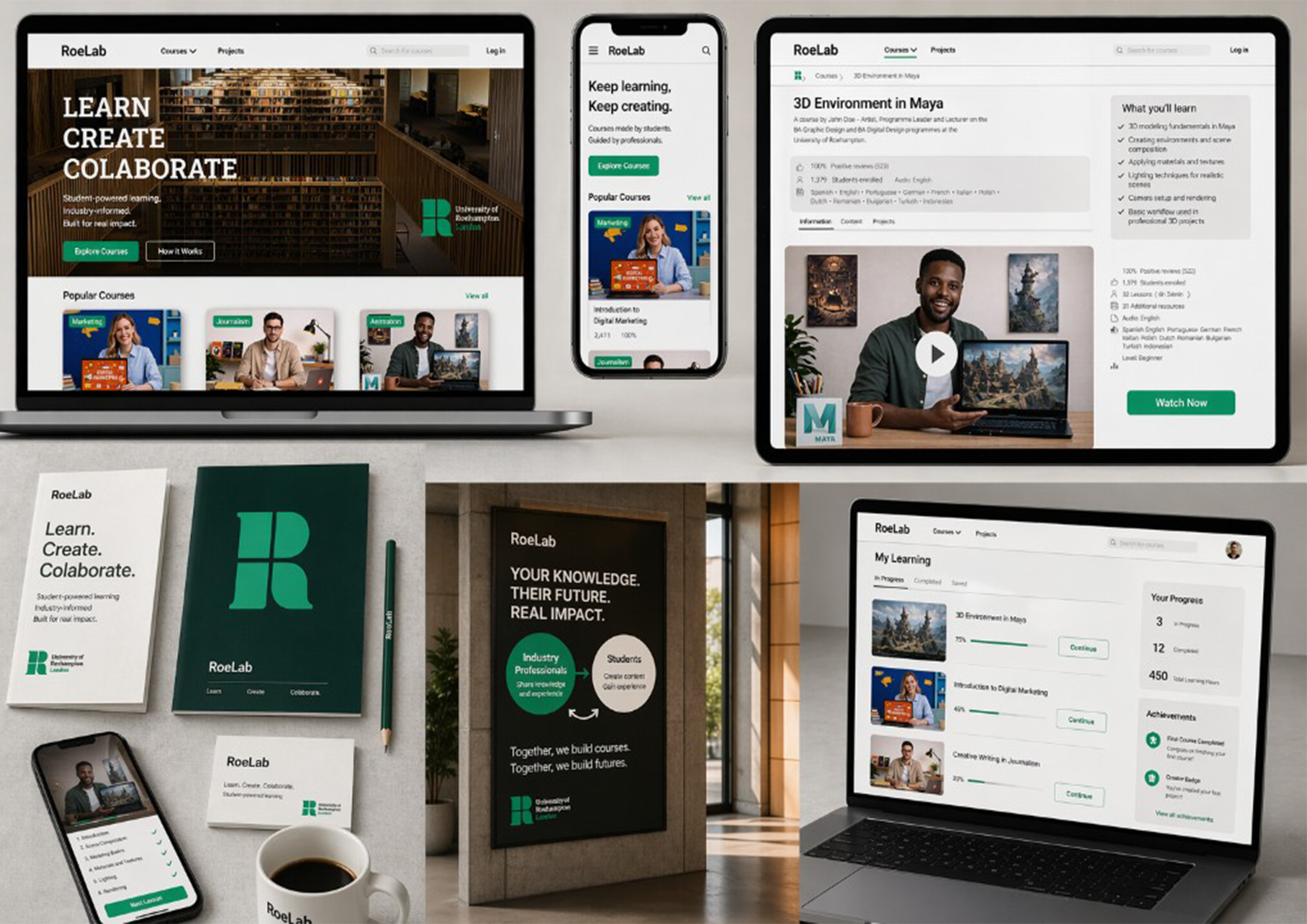
A platform built on two layers.
The dual-layer model is both the platform's core mechanic and its central design challenge. The experience had to work for two very different user types — industry professionals contributing expertise, and students both consuming and creating content — without feeling split or inconsistent.
The UI establishes a shared visual language and navigation logic, with role-specific interfaces that feel native to each user's context. Approachable enough to engage students from their first week. Credible enough to attract professionals who take their knowledge seriously.
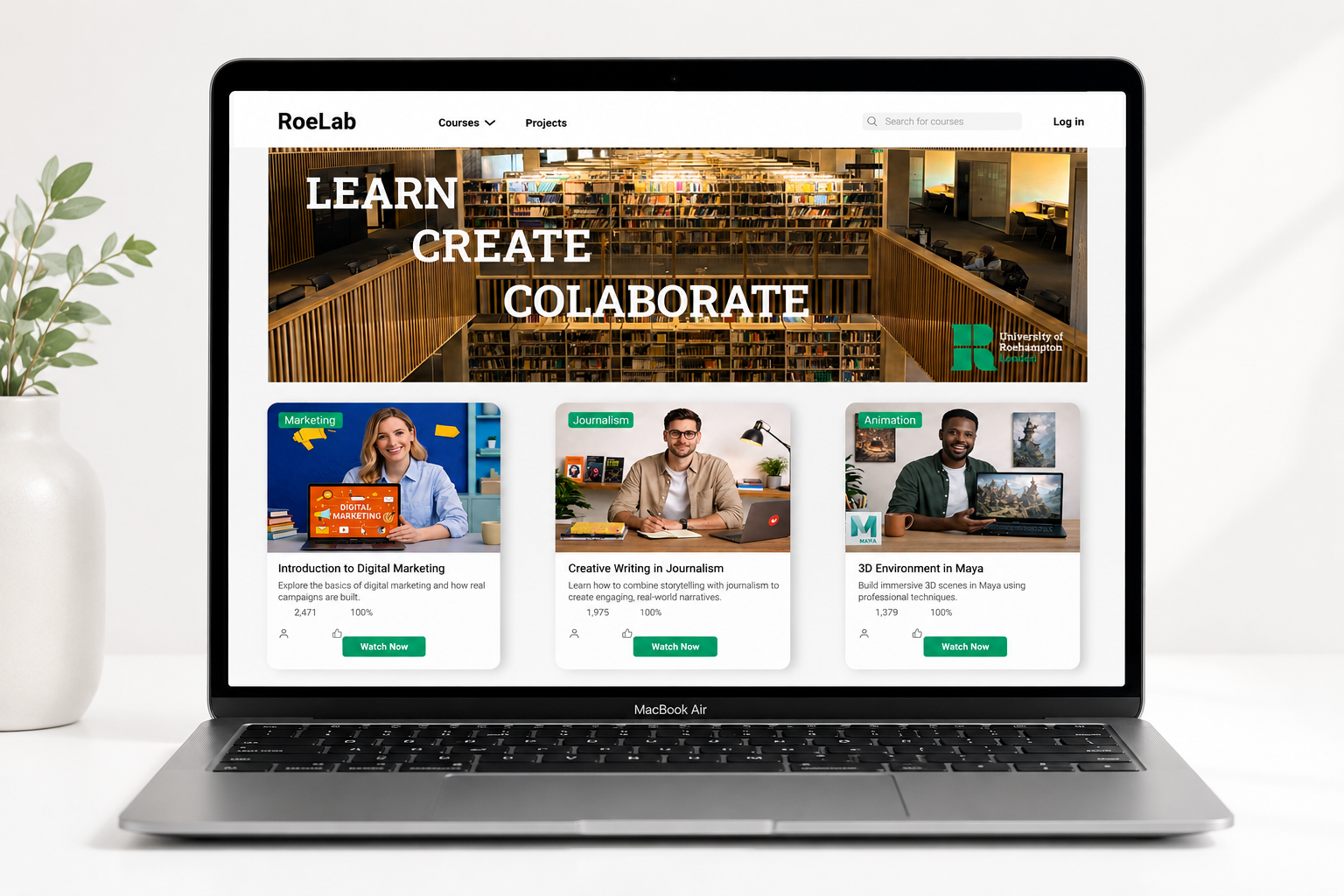
Platform UI — desktop experience
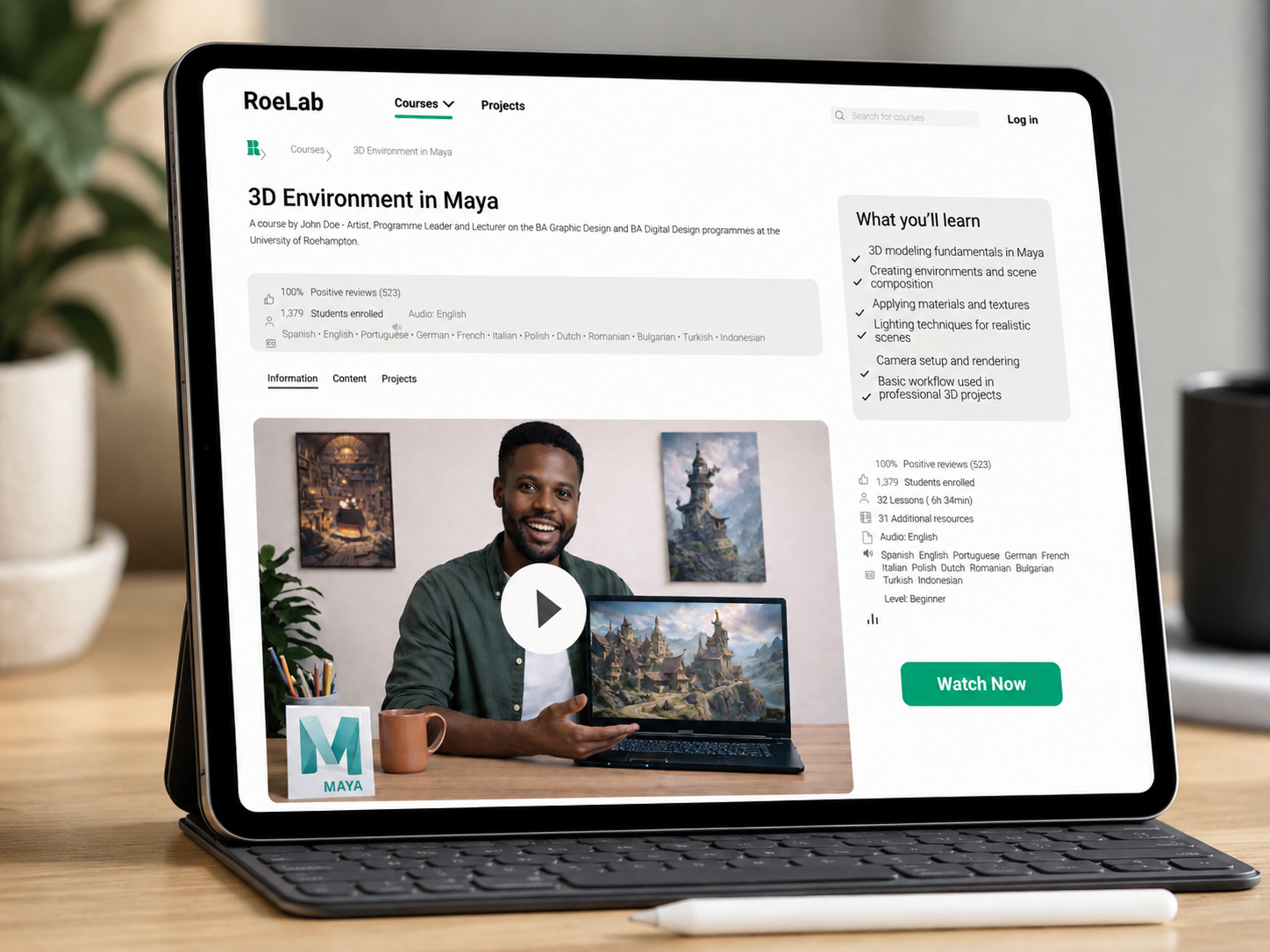
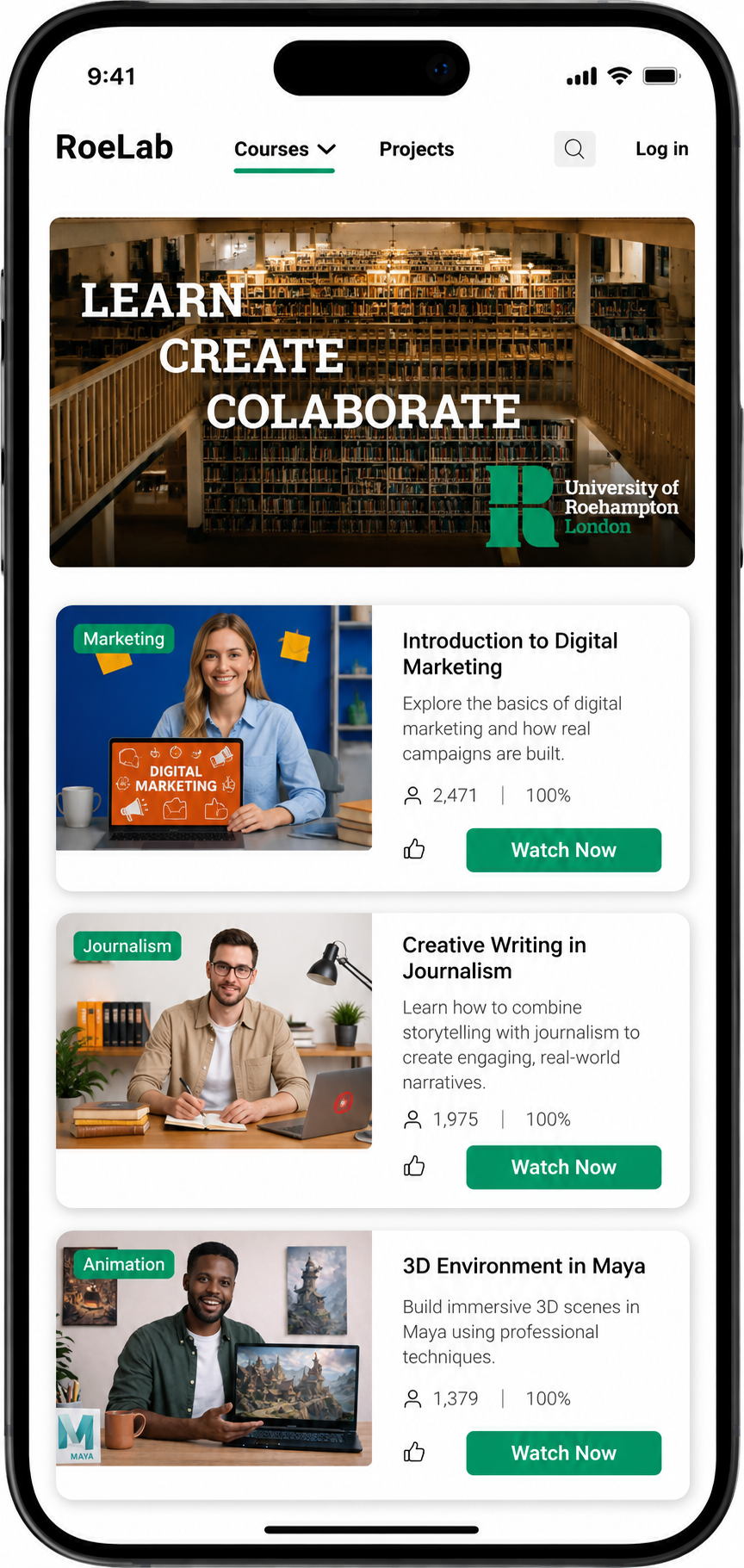
Platform UI — tablet and mobile
"Students don't just deepen their primary skill — they strategically expand into adjacent fields that make them more specific, and more employable."
Service design layer
RoeLab is also a service design project. The underlying system — user personas, stakeholder map, and service blueprint — defines how the platform functions as an experience across touchpoints, not just as an interface. The design had to account for three distinct stakeholders: the university, the industry professional, and the student, each with different needs, motivations, and definitions of what success looks like.
For the university: a way to make latent faculty expertise visible and scalable. For the professional: a low-friction channel for sharing knowledge with an engaged audience. For the student: access to the kind of practical understanding that currently depends on who you happen to know. The platform only works if it serves all three — which meant the design system had to be credible to each, without feeling built for any one of them specifically.